

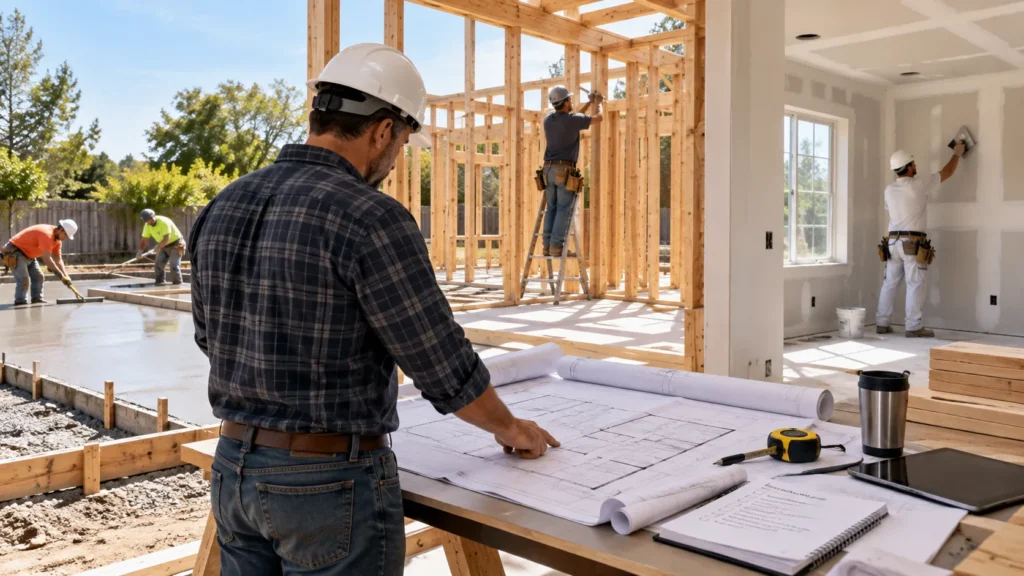
LRV Construction identifies concrete, carpentry, and drywall installation among the general contractor trades its team can self-perform. That detail matters because these activities often connect directly with work performed before and after them. For DMV-area owners reviewing a construction plan, the useful question is not simply who performs each trade. Ask what must be complete before that work starts and what must be verified before the next activity can proceed.
Create a trade-handoff sheet for the major scopes. For each activity, record the prerequisite work, responsible party, inspection or verification needed, and the next trade depending on completion. Carpentry, for example, may need to reach a defined stage before drywall closes an area. Concrete work can establish conditions that affect subsequent construction. Mapping these dependencies makes the schedule easier to understand than viewing every trade as an isolated start and finish date.
Use the handoff sheet during field reviews. Before a succeeding activity begins, confirm that the preceding scope is complete enough to move forward. Photograph concealed conditions when appropriate and record unresolved items instead of assuming they can be corrected later. LRV Construction’s construction management includes on-site supervision, quality assurance, inspection, and schedule control, which are particularly relevant where multiple trades meet in the same work area.
Finally, distinguish responsibility for performing work from responsibility for coordinating it. Even when a contractor self-performs certain trades, other subcontracted activities still need clear sequencing and communication. Owners should know who makes the call when one activity is not ready for the next. Reviewing LRV Construction’s completed work can provide additional context on its project background. A simple handoff plan gives every participant the same answer to three practical questions: what needs to happen first, how completion will be verified, and who can authorize the next step.


